TRACK & FIELD QUEENS
WOMEN'S TRACK & FIELD
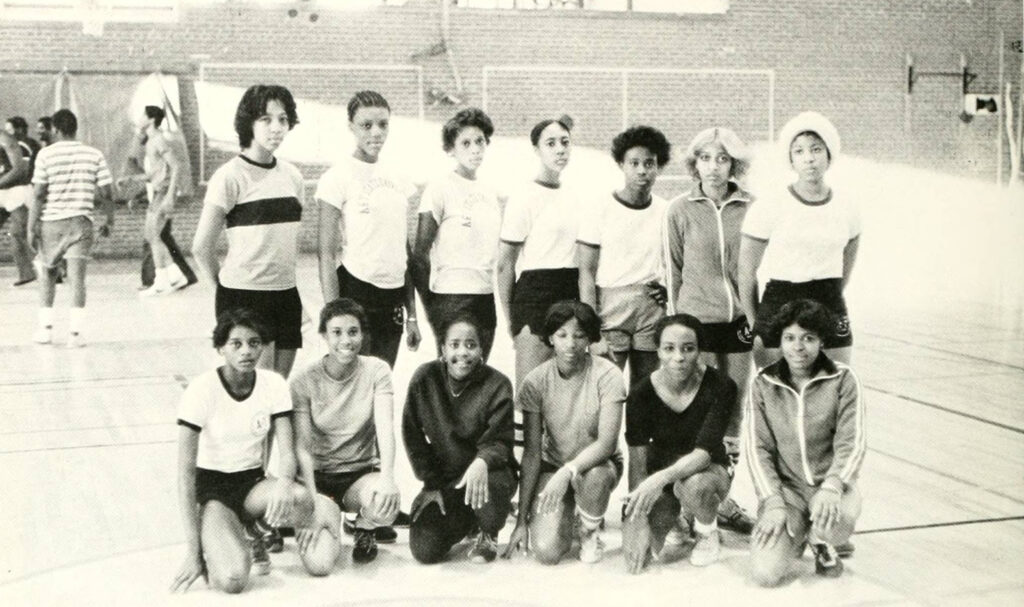
Roots and Roadblocks: The Founding Years (1970s–1980s)
When Title IX swept across American universities in the early 1970s, it opened doors that had long been welded shut. North Carolina A&T State University, a historically Black institution in Greensboro, was quick to answer the call.
The women’s outdoor track team started humbly, with little funding and even less fanfare. Early coaches juggled multiple sports, often transporting athletes in their own cars to meets. Facilities were shared with the men’s team, and the hurdles were often more metaphorical than physical
Finding Feet: Growth and Regional Impact (1990s–2000s)
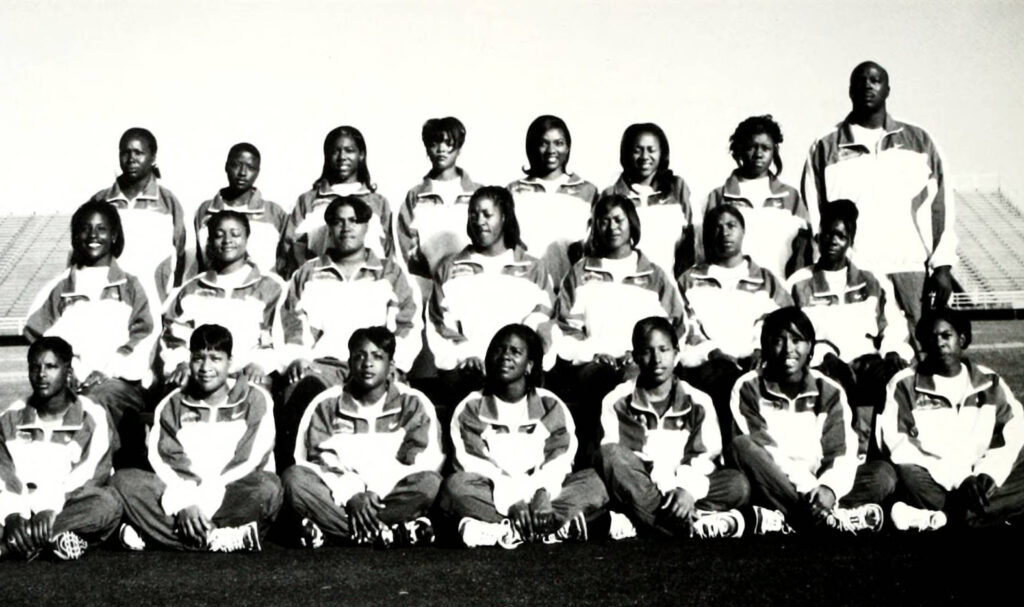
By the 1990s, NC A&T’s women’s track was no longer an afterthought. The university invested in better facilities and recruited former standout athletes to coach the next generation. The Aggies started to make noise in the Mid-Eastern Athletic Conference (MEAC), led by runners such as Crystal Haywood and sprinter Amber Scott.
Through the 2000s, the program became a regular presence at conference championships. Though still dwarfed by traditional track powerhouses, NC A&T’s women’s team was on the map. Their relay teams in particular became a source of pride, showing that a small program could hold its own against bigger schools with deeper pockets.
A New Era: The Ross Revolution (2010–2016)
The arrival of head coach Duane Ross in 2012 marked a turning point. Ross brought an Olympian’s pedigree, a recruiter’s eye, and a belief that NC A&T could compete with anyone, anywhere. He focused on discipline, recruiting top-tier talent from North Carolina and beyond, and building a culture that valued both academics and athletics.
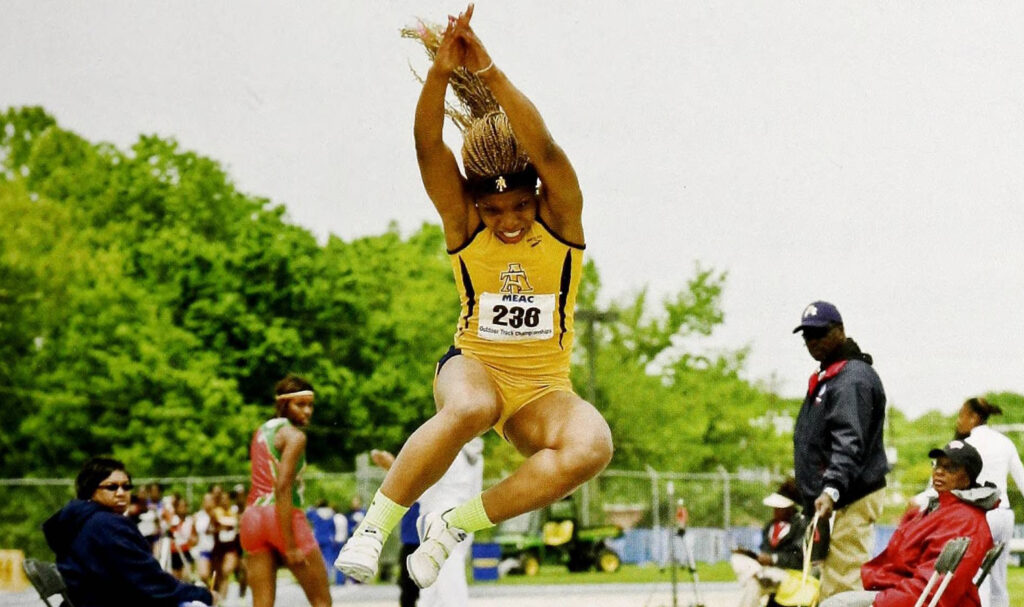
Under Ross, the team shattered school records and racked up conference titles. The Aggies started to send athletes to the NCAA Championships, a milestone that turned heads nationwide. Names like India Brown and Kayla White became synonymous with excellence. The team’s signature blue and gold uniforms began appearing in the finals of national meets—not just as participants, but as contenders.
National Prominence: Championship Contenders (2017–2022)
This was the golden era for NC A&T women’s outdoor track. The Aggies became a national powerhouse, finishing among the top teams at NCAA Championships and sending multiple athletes to the U.S. Olympic Trials. Kayla White won the 2019 NCAA national championship in the 200 meters, becoming the first Aggie woman to claim an individual outdoor NCAA title.
For the first time, NC A&T athletes were not just representing their university, but also the broader tradition of HBCU excellence on the world stage. The media took notice, and so did aspiring high school athletes across the country. Greensboro became a destination for young women who dreamed of Olympic glory.
Carrying the Torch: Resilience and Renewal (2023–Present)
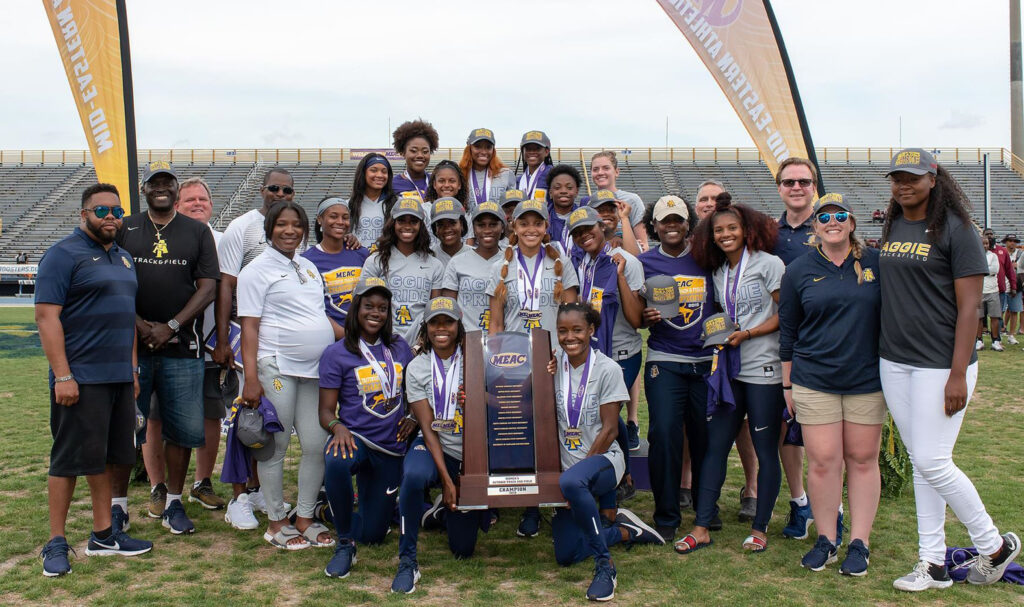
After Coach Ross’s departure in 2022, there were inevitable questions about whether the program could maintain its momentum. But the Aggies have continued to thrive, thanks to a foundation built on decades of hard work. New coaches, many of them former Aggie athletes, have drawn on the program’s rich history to inspire the next generation.
Today, NC A&T’s women’s outdoor track team remains one of the most respected programs in the nation. The legacy of resilience, pride, and excellence endures—and every season, a new chapter is written on the same hallowed track where it all began.
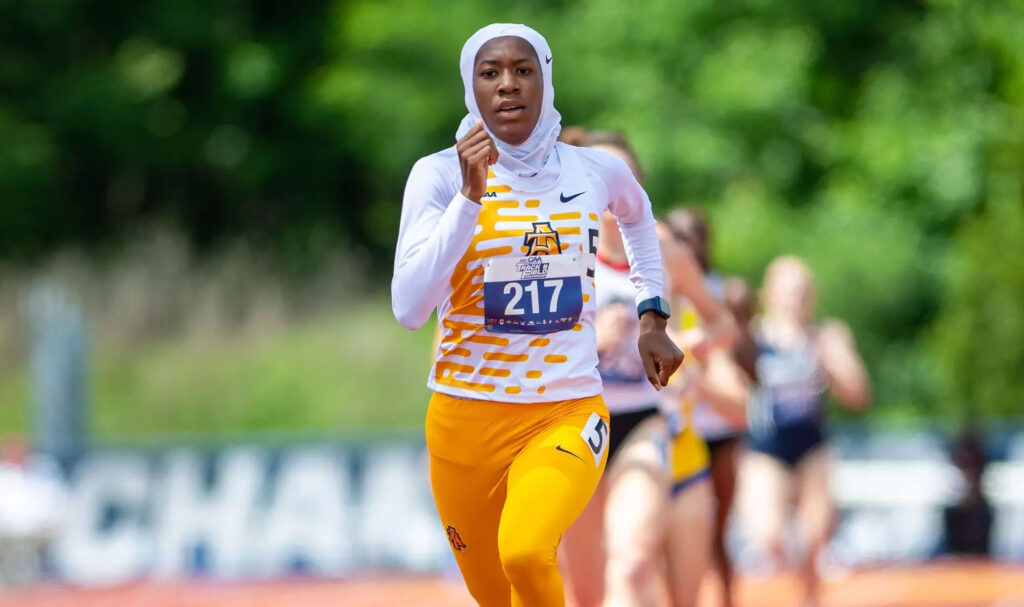
MEAC Conference Championships
LEGACY AND IMPACT
From uncertain beginnings to the heights of national prominence, the NC A&T Women’s Outdoor Track Team has never stopped moving forward. The baton has changed hands, but the Aggie spirit—fierce, proud, and unbreakable—remains the same.