GOLDEN GRIDIRON
AGGIE FOOTBALL
The Early Years: Roots and Resilience (1901–1940s)
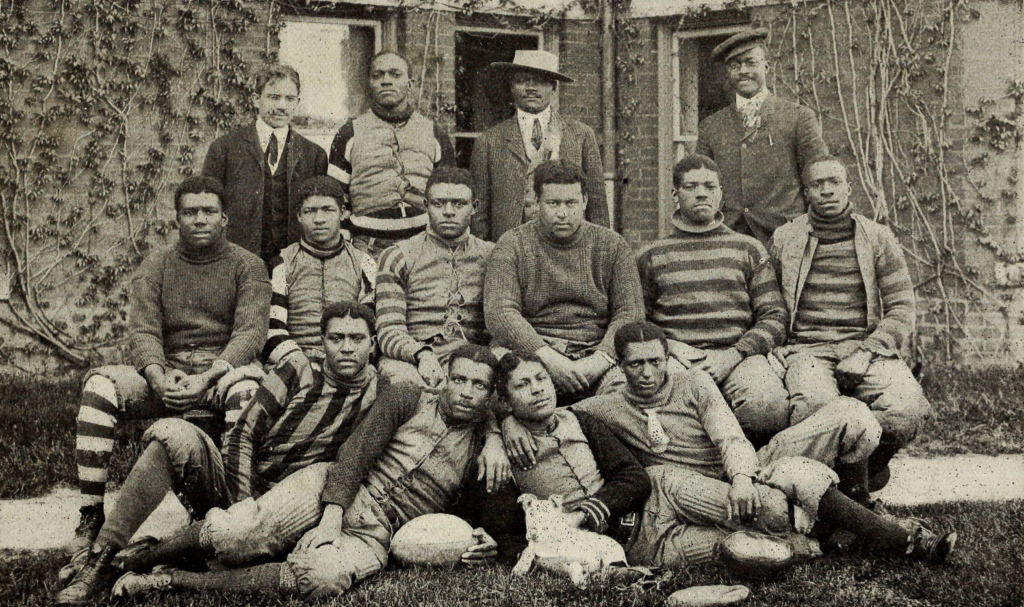
The Aggies fielded their first football team in 1901, making them one of the oldest HBCU programs in the country. Those early decades weren’t easy. Funding was tight, equipment was scarce, and the social climate was openly hostile. But the Aggies played on, often scheduling games against nearby Black colleges and even high schools. Wins and losses from those years are tough to track, but the program’s perseverance laid the foundation for everything that followed.
Building a Name: MEAC and the Rise of Rivalries (1950s–1970s)
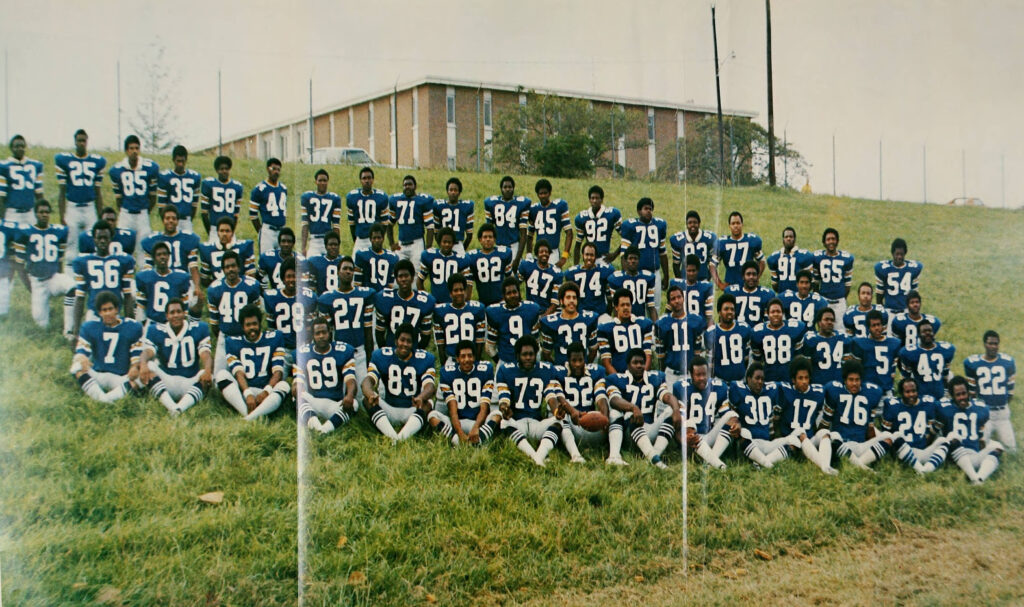
As college football grew, so did A&T’s ambitions. The 1950s and ‘60s saw the team develop a reputation for speed and physicality. By 1970, A&T became a founding member of the Mid-Eastern Athletic Conference (MEAC), a league that would come to define much of its athletic identity.
Rivalries—especially with North Carolina Central, dubbed the “Aggie–Eagle Classic”—became fixtures on the schedule, drawing crowds and cementing the team’s place in Black college football lore.
The Broadway Era and National Titles (1980s–1990s)
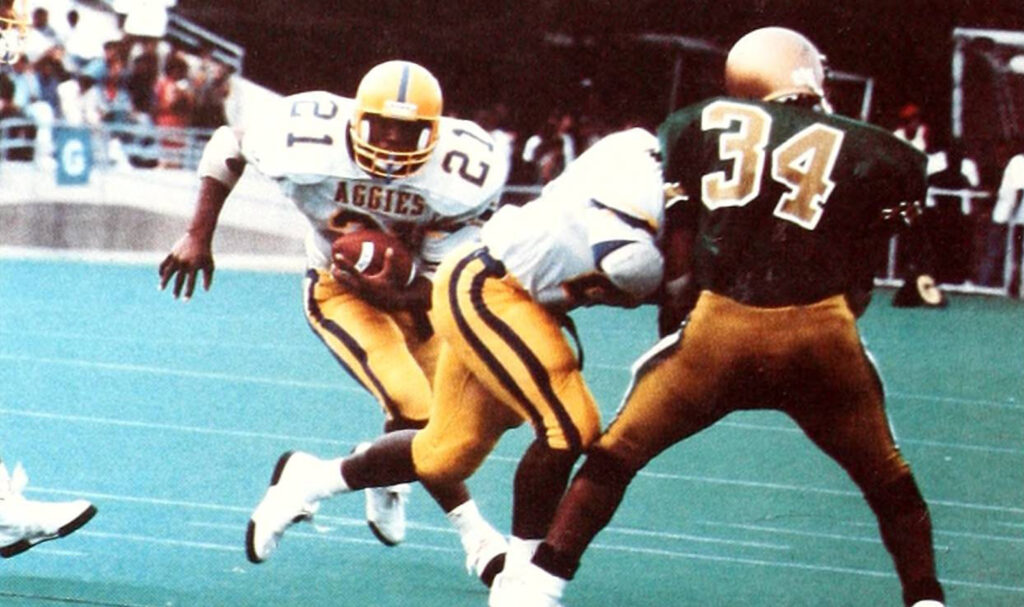
The Aggies’ profile continued to rise in the late 20th century. Coaches like Bill Hayes and later, Rod Broadway, turned A&T into a powerhouse. Under Hayes, the Aggies won MEAC titles in 1986 and 1991, and a Black College National Championship in 1990. These teams featured future NFL talent and packed Aggie Stadium (later renamed Truist Stadium) with fans. The Aggie defense, known as “Blue Death,” gained notoriety for stifling opponents.
A New Millennium: Triumphs and Turbulence (2000–2010)
The early 2000s were a roller coaster. A&T notched a MEAC championship in 2003 but soon faced NCAA sanctions and a string of losing seasons. Despite setbacks, loyal fans kept showing up, and the marching band—the Blue and Gold Marching Machine—remained a national draw. In 2011, the program made a decisive hire: Rod Broadway, a proven winner at other HBCUs.
The Aggie Renaissance: Dominance and Prestige (2011–2021)
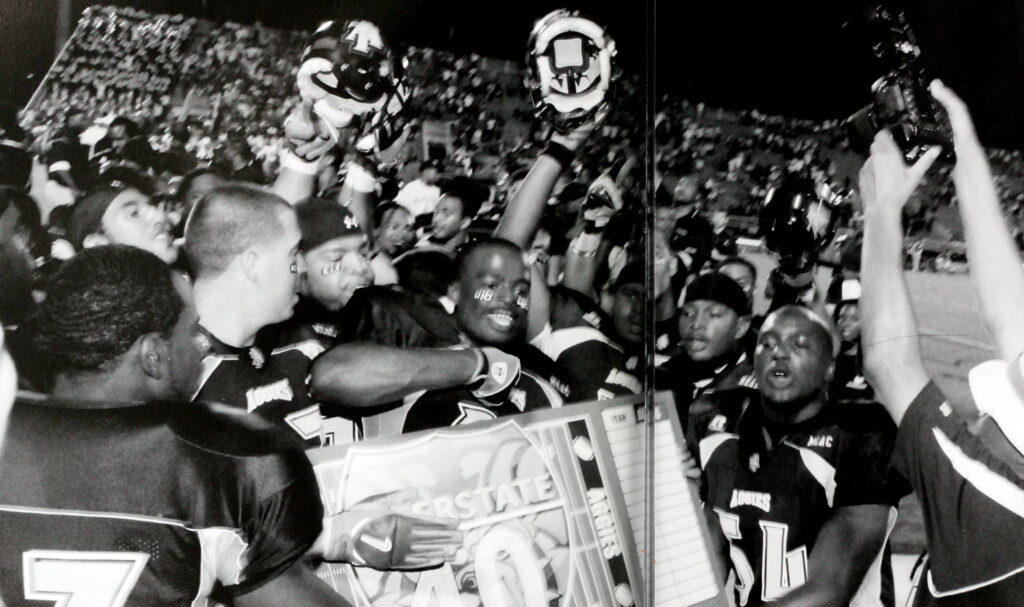
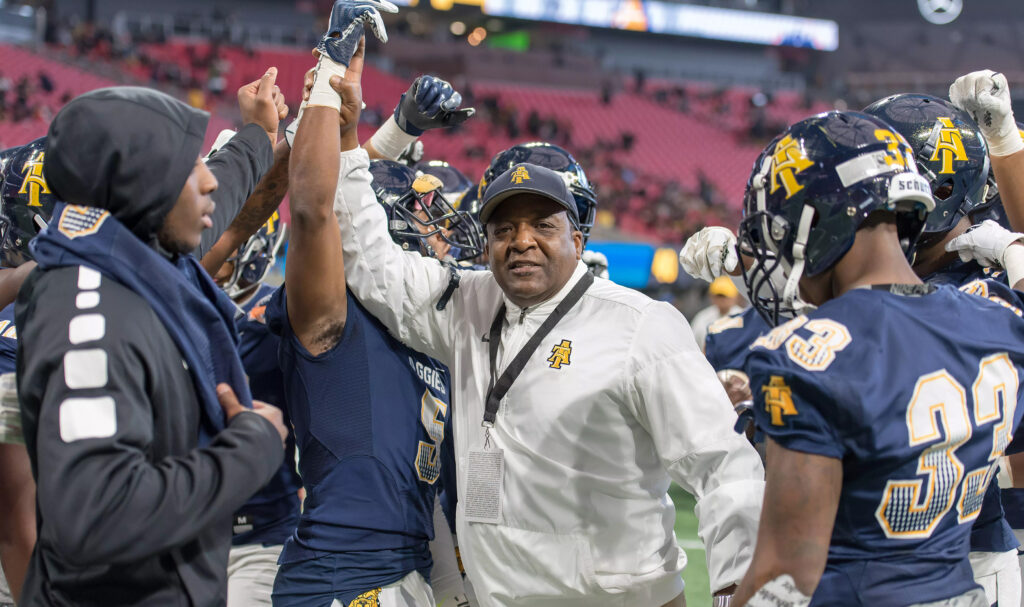
Broadway’s arrival marked a golden era. The Aggies won multiple MEAC championships (2015, 2017, 2018, 2019) and captured the Celebration Bowl—the de facto HBCU national championship—four times in five years (2015, 2017, 2018, 2019). These teams were stacked: running back Tarik Cohen set school and conference records before heading to the NFL, and the defense returned to its “Blue Death” roots.
The Aggies became the standard-bearer for HBCU football nationally. Games were televised on ESPN, stars like NFL Hall of Famer Tarik Cohen and offensive lineman Brandon Parker brought pro attention, and attendance soared
Recent Years: Growth and Ambition (2022–Present)
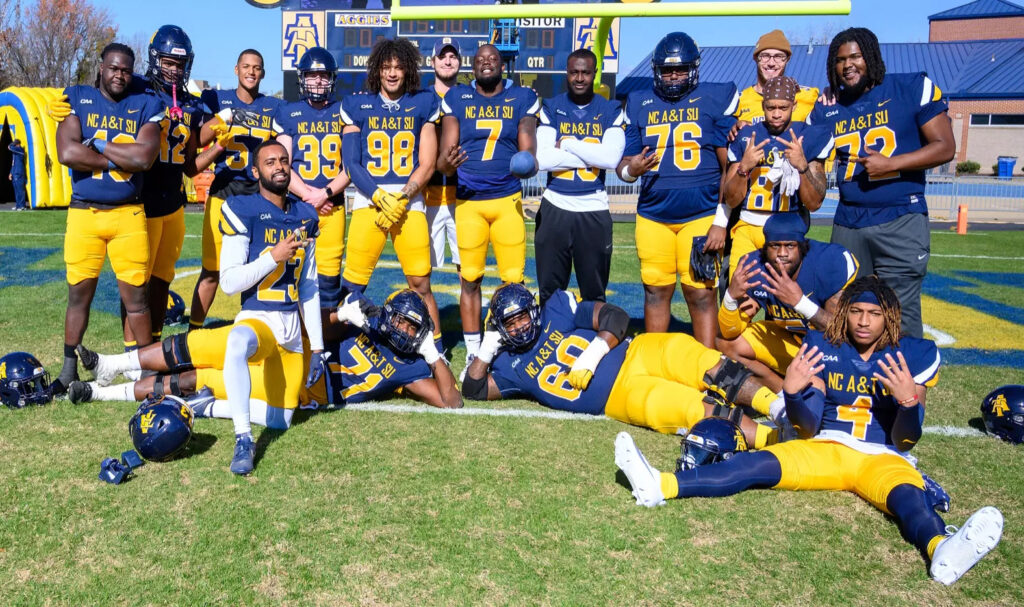
In 2021, A&T left the MEAC for the Big South Conference then Coastal Athletic Association, seeking new challenges and bigger stages. The transition wasn’t always smooth, but it reflected the university’s pursuit for greatness. As of 2026, the Aggies continue to field competitive teams, drawing local and national recruits, and maintaining one of the most passionate fan bases in college football.
Black College National Championships
CIAA Conference Championships
MEAC Championships
LEGACY AND IMPACT
NC A&T football isn’t just about wins and losses. The team’s story is tied to the civil rights movement (students from A&T launched the Greensboro sit-ins), to the rise of HBCU athletics, and to the ongoing fight for respect and recognition. With over a century of history, the Aggies have become more than a football team—we are a symbol of grit, pride, and progress for generations of students and alumni.